Predictive Marketing: How AI is Transforming Customer Targeting?
Table of Contents
Marketing is not going to be guesswork in 2026; it is going to be specific. Companies, which continue to utilize traditional campaigns, are falling behind and those that have adapted predictive marketing are controlling the customer engagement, customer conversions, and customer retention.
Why? Since the current generation of consumers would require a brand that is aware of them even before they act. It is the era of AI predictive marketing when data intersects with intelligence and marketing becomes smarter and faster as well as highly individualized.
What is Predictive Marketing?
Predictive marketing is a data science approach where artificial intelligence (AI), machine learning and predictive analytics are used to predict customer behavior, as well as make marketing decisions optimally. Predictive marketing unlike the traditional marketing that does not know what a customer has done in the past but predicts what the customer will do in the future thus enabling the business to proactively engage in marketing.
Key Benefits:
- Individualizes mass messaging.
- Improves conversion rates.
- Minimizes customer acquisition expenses.
- Increases loyalty and retention.
- Optimizes marketing spend.
Using predictive analytics in marketing, enterprises can obtain the insights allowing them to take actions at each phase of the customer lifecycle, including lead generation and nurturing, upselling and loyalty programs.
How Predictive Marketing Works?
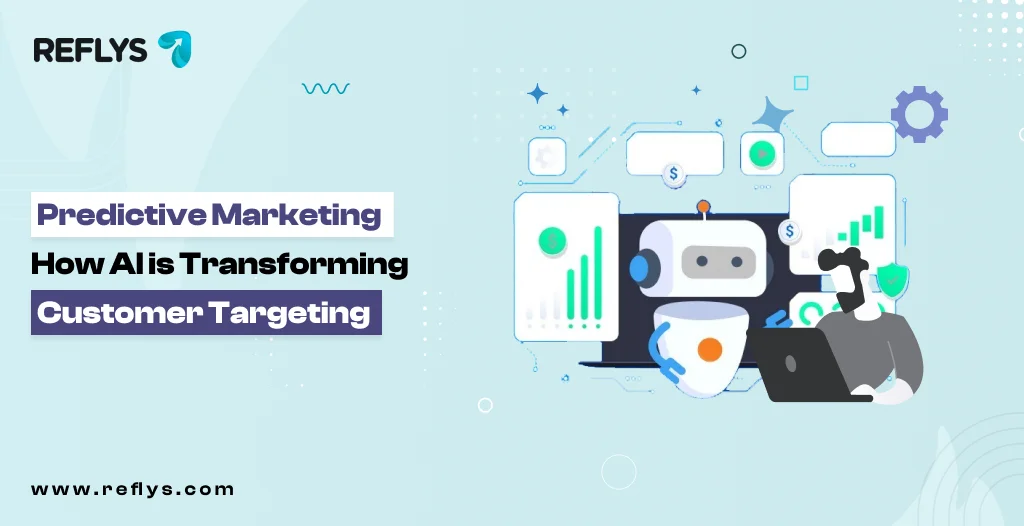
Predictive marketing is an integration of a number of sophisticated technologies to provide actionable information. This is divided into the following stages:
1. Data Collection
Predictive marketing is based on data. There are several sources of information in businesses:
- Online behavior (pages visited, time spent on it, clicks, etc.)
- CRM systems and purchase history.
- Social media interactions
- Email response and campaign responses.
- Mobile app activity
This information is necessary to give AI models context, to predict how people will act in the future.
2. Machine Learning Models
Machine learning models process customer behavior patterns and examine them, identify concealed relations, and predict conclusions. The common techniques applied to predict the purchase intent, churn risk and likelihood of engagement are regression analysis, clustering and decision trees.
3. Prediction of Customer Behavior.
AI models predict:
- What are the customers who are likely to make purchases?
- Products that they can be interested in.
- Communication channels that they like.
- Potential lifetime value
This is referred to as customer behavior prediction which makes it possible to have hyper-targeted campaigns.
4. Automated Decision-Making
On the basis of these insights, businesses are able to automatically:
- Provide individual recommendations.
- Send email, SMS or WhatsApp campaigns.
- Dynamic pricing and promotions.
- Prioritize high-value leads
The marketing automation through AI is where the data becomes results
Why Predictive Marketing Matters in 2026?
To be a marketer in the modern world, it is necessary to have more than reach; it should be relevant and timely. Consumers want to see a brand being interested in them and communicating the appropriate message at the appropriate time. Predictive marketing solves this through the use of data, AI, and automation.
Key Advantages:
- Hyper-Personalization: One-to-one messages are more effective than the generic ones. Artificial intelligence enables companies to personalize content.
- Better Conversion Rates: Predictive marketing leads to better purchase probability by focusing more on the high-intent groups with the right offer.
- Lower Customer Acquisition Costs: Marketing to the customers who are likely to convert will conserve marketing expenditure.
- Improved Customer Retention: Predictive analytics can also detect at-risk customers and take appropriate actions on time.
- Data-Driven Decisions: Predictive knowledge eliminates intuition, making the marketing tactics evidence-based.
Predictive Marketing Strategies That Work
In order to attain results, tools will not be sufficient but you need a clear strategy that will utilize AI to support your business objectives.
1. Advanced Customer Segmentation.
AI is more accurate in dividing your audience than just demographics. In predictive segmentation, there are:
- Behavior (e.g. browsing patterns, purchase frequency)
- Engagement level
- Churn risk
- Potential lifetime value
Segmentation facilitates extremely personalized campaigns that are more appealing to individual users, making the campaigns more engaging and converting.
2. Predictive Lead Scoring
Not all leads are equal. The predictive models evaluate the score of leads on the likelihood to convert to assist sales teams to focus on the most promising leads.
AI is more accurate in dividing your audience than just demographics. In predictive segmentation, there are:
- Behavior (e.g. browsing patterns, purchase frequency)
- Engagement level
- Churn risk
- Potential lifetime value
Segmentation facilitates extremely personalized campaigns that are more appealing to individual users, making the campaigns more engaging and converting.
Scenario: A SaaS company has identified lead that shows that they have taken the interest in the trial functionality. Such leads will automatically receive a higher score and will be sent individual onboarding emails.
3. Individualized Product Suggestions.
Predictive models can also be used by e-commerce platforms to propose products as they happen. Recommendations are made on the basis of previous behavior and buying pattern and similarity with other users.
Example: the artificial intelligence-powered system of Amazon suggests you purchase a product, but the suggestions are based on what you looked at, what you have purchased in the past or how other customers like you behave.
4. Churn Prediction and Retention Campaigns
Predictive models are used to discover customers at risk and therefore strategies to protect customers are proactive.
Case Study: A telecommunication organization detects users who have decreasing apps use. The automated messages provide personalized discounts or plans to keep them.
5. Automated Content Optimization.
These solutions also enable you to customize your site, emails, and advertisements on-the-fly, through predicting what your users are most likely to perform next. The system allows personalizing the headlines, offers, or CTAs of each visitor.
Real-World Predictive Marketing Examples
Now, we can take a look at the way the most popular brands are implementing predictive marketing:
Example 1: Personalization of E-Commerce
To know what product they are interested in, an online fashion store uses browsing to make predictions. Individualized recommendations and time-based offers are sent to the customers through email or WhatsApp, which boosts the rate of conversion.
Example 2: Streaming Platforms
Streaming websites and applications have been developed in order to deliver a live content to the users in various media formats.
By analyzing viewing history, watch time, and preferences, video streaming platforms help the user to guess at any moment the next show he or she might enjoy and keep the engagement high and churn low.
Example 3: Optimization of Email Marketing.
AI recommends the most appropriate time to send emails to each user, which will guarantee the highest rates of opening emails and interactions.
Example 4: Sales Forecasting
Predictive analytics assists retail companies to predict demand of particular products to optimize inventory and promotional campaigns.
Example 5: Loyalty Programs
Predictive marketing is the ability to determine VIP customers and automatically deliver them individual rewards or exclusive deals, enhancing lifetime value.
Predictive Marketing Tools & Software
Predictive marketing demands proper technology stack.
Top Categories of Tools:
Forecasting Marketing Software Solutions
HubSpot, Salesforce, and SAS are the platforms offering insights on customers based on AI, customer segmentation, and automated campaigns.
AI-Powered CRM Systems
Predictive analytics in CRMs assist sales teams to recognize high-value leads, predict revenue and enhance engagements.
Marketing Automation Solutions.
Such tools as Marketo, Active Campaign, and Infobip assist companies to automate their marketing with the help of AI and manage to conduct behavior-based campaigns on various channels.
Analytics and BI Tools
Data analysis applications such as Tableau and Power BI are useful in the analysis of complex data, identification of trends, and provision of insights that are used in marketing processes.
- When selecting tools, prioritize:
- Integration with current systems without hitches.
- Artificial intelligence and machine learning.
- Live personalization facilities.
- Growing campaigns scalability.
AI Predictive Marketing: The Game Changer
Predictive marketing is based on artificial intelligence.
The most important benefits of AI in Marketing:
Real-Time Personalization
AI presents content, suggestions, and proposals in real-time and adjusts to the behavior of each customer.
Automated Campaigns
AI allows campaigns to operate independently based on behavior, events or customer milestones.
Smarter Customer Insights
AI finds the latent relationships within data which a human being might not notice.
Continuous Improvement
Machine learning-models are constantly updated with new data and become more accurate with time.
Deep Dive: Sales Forecasting with Predictive Marketing
Predictive marketing is a business necessity especially in sales forecasting. A correct forecasting will guarantee:
- Best management of inventory.
- Proper budgetary allocation.
- Better revenue estimations.
- Smarter marketing spends
Examples: Predictive analytics is used by a chain of retail outlets to predict the demand during a holiday season. According to the model, the company will optimize inventory, introduce targeted promotions, and optimize revenue and not overstock.
Customer Segmentation with Predictive Marketing
The conventional segmentation is prone to demographics. Predictive marketing can be further extended to segmentation by including:
- Behavioral insights
- Transaction history
- Engagement patterns
- Churn or conversion probability.
Example: An example of a subscription-based platform will categorize the users according to their engagement and lifetime value estimates. Premium offers are given to the VIP users, retention offers are given to the mid-tier users and reactivation campaigns are given to the low-value users.
Personalized Marketing Strategies Powered by AI
AI facilitates hyper-personalized campaigns to appeal to an individual. Key strategies include:
- Dynamic Email Campaigns: Subjects, offers and content can be customized against user action.
- Behavior-Based SMS/WhatsApp: Issue messages based on user behavior (abandoned carts and inactivity and product browsing).
- Real-Time Web Personalization: Customize the web site banners, pop-ups and content to each visitor.
- AI-Powered Recommendations: Recommend products and services or content depending on the anticipated interests.
Individual campaigns will result in a high level of engagement, conversions, and customer loyalty.
Challenges in Predictive Marketing
Although there are enormous benefits of predictive marketing there are a few challenges:
- Data Quality Issues: Missing or not accurate data may lower the accuracy of the model.
- Privacy and Compliance: Companies should follow the laws of data protection such as GDPR or CCPA.
- Integration Complexity: It can be a challenge to bring various systems together CRM, email, analytics, and e-commerce.
- High Initial Investment: Complex predictive marketing algorithms will need finances and experience.
- Continuous Monitoring: Predictive models need frequent update and monitoring in order to stay true.
Implementing Predictive Marketing: A Step-by-Step Guide
Step 1: Define Objectives
Establish specific objectives like increment in conversions, decline in churn or customer lifetime value.
Step 2: Collect & Clean Data
Collect and process information on all touchpoints. Make sure of good and structured datasets.
Step 3: Choose Predictive Marketing Tools
Choose tools that are within your strategic focus, including AI-based CRM programs and automation tools.
Step 4: Develop Prognostic Models.
Build customer behavior models, audience segmentation models and sales forecasts.
Step 5: Roll out AI-Powered Campaigns.
Automation Recruit and determine automated campaigns through email, WhatsApp, push messages, or SMS.
Step 6: Optimize, Measure, Repeat
Monitor such important performance indicators as conversion rates, engagement, customer retention and ROI. Always improve campaigns using real-time insights.
Emerging Trends in Predictive Marketing
The future of predictive marketing is febrile, and there is a lot of innovations that define how the brands communicate with customers:
Hyper-Automation
The marketing campaigns will be conducted with complete autonomy and run using AI, predictive analytics and automation.
Voice & Conversational AI
Predictive marketing will also be combined with chatbots, virtual assistants, and voice interfaces to carry out the conversational experience.
Real-Time Decision Engines
Hyper-targeted marketing at scale will be possible due to immediate choices made on live information.
Emotion & Intent Analysis
Not only will AI be used to predict actions, but also emotions and intent, which will form more personalized experiences.
Cross-Channel Orchestration
Predictive models will also coordinate the campaigns in various channels that will provide seamless experience to the customers.
Conclusion: The Future is Predictive
Predictive marketing is not a luxury anymore it is a necessity to any business that wants to get a competitive advantage. Using AI, predictive analytics, and automation, companies will be able to predict customer needs, personalize customer experiences, maximize marketing budgets, and ROI.
By the year 2026, businesses which adopt predictive marketing will transform data into action, insight into engagement and predictions into profits. Gone are the days of reactive marketing, in its place are the predictive marketing days.

Muhammad Ali Hassan
Muhammad Ali Hassan is a versatile Software Engineer and Full-Stack Developer with a robust foundation in software engineering principles. Specializing in technologies such as ReactJS, .NET, ColdFusion, and Lucee, Ali has a proven track record of building scalable web systems and custom software solutions. He is dedicated to clean code and performance optimization, consistently exploring emerging web technologies to deliver high-impact digital products.
Frequently Asked Questions
Just imagine yourself as a bartender and the drink of a regular is known before even he/she sits down. You don’t simply wait around until someone searches to find a product, you use their previous behavior to make a guess on what they are likely to desire next. You discover what they are fond of, and put those particular things in full view of them before they even suspect that they have any need of them.
Normal ads are super broad. You spend a bunch of money showing a graphic to thousands of random people and hope a few of them care. Predictive targeting is hyper-focused.
Not anymore. In the olden times, yes, you had a squad of number crunchers to draw this off. But the implements we have here at the moment simply do it on your behalf.
Small stores honestly need it the most. You probably don’t have thousands of extra dollars to blow on Facebook ads that don’t convert. Predictive setups make sure the small amount of traffic you do get actually turns into cash. Plus, once you plug it into your site, it pretty much runs on autopilot.