Passive web forms are wasting your revenue dry. A prospect lands on your pricing page, looks around, gets confused, and leaves. Why? Because filling out a standard “Contact Us” form feels like sending an email into a black hole. If you want to capture modern buyers, you need a lead generation live chat setup that answers them in milliseconds, not hours.
Throwing more sales reps at the problem just doesn’t work anymore. People sleep. They get distracted. It is impossible to cross-reference an individual’s history of browsing fast enough to keep them from closing the browser. It is a waste of money in salaries to pay for data entry by hand. Your most promising customers are diverted to rivals who respond quickly.
The solution is to drop the manual inbox entirely and change to an omnichannel messaging platform. By setting up automated lead capture with a tool like Reflys, you turn scattered social media DMs and website visits into one seamless, 24/7 sales pipeline. Let’s look at exactly how to build this out.
Expert Insight: As the founder of Reflys, my entire focus is on Meta API compliance and building reliable webhooks. We don’t mess around with basic auto-responders. In a recent rollout for a B2B client, switching their existing contact page with an intent-triggered chat flow increased their scheduled meetings by 41% in just one month. It does this because it reaches the customer precisely where they are and then quietly organizes the details in the CRM while it runs in the background.
The Advanced Quick Win: Dynamic Intent-Based Webhook Routing
Most companies just slap a chat widget on their site that pops up the second a page loads. That’s a great way to annoy people and collect junk leads. Instead, set up a targeted JSON webhook based on actual user behavior.
Fire the chat only if someone spends 45 seconds on your pricing page, scrolls halfway down, and moves their mouse toward the back button. When that happens, trigger a highly specific prompt: “Comparing our Enterprise tier to the Professional plan? I can shoot the technical feature breakdown right to your WhatsApp.” This instantly shifts a bouncing visitor into an authenticated WhatsApp sequence.
Setting Up Your lead generation live chat Structure
An effective AI customer support platform needs a logical backbone. You have to map out exactly how data moves before you write any chat copy. The whole point is getting an anonymous visitor into your database without a human lifting a finger. To do this, your setup needs to link what the user does on your site directly to your API triggers.
Event-Driven Lead Capture Matrix
| User Behavior Trigger | Data Captured | API Action Executed | Expected Lead Outcome |
|---|---|---|---|
| 3+ visits to specific feature page | Device IP, timestamp, page URL | Initiate proactive deep-link offer | High-intent product demo booking |
| Abandoned shopping cart after 10 mins | Cart ID, item values, session ID | Send automated dynamic discount via DM | Recovered revenue and verified contact |
| Clicks “Contact Sales” from Instagram profile | Instagram handle, bio link source | Trigger automated B2B qualification sequence | Segmented CRM profile creation |
Advanced Social Media Lead Generation Workflows
Social channels aren’t just for brand awareness anymore. They are direct sales pipelines. But catching leads here means playing strictly by the platform rules.
Facebook Messenger Automation & Instagram DM Automation
Trying to manage Meta inboxes by hand is a quick way to drop the ball. With Instagram DM automation, you need to set up keyword listeners connected to your Stories. If a follower replies to a product Story with a specific word, your AI chat automation should instantly drop the resource link in their DMs and grab their email address right there in the thread.
Facebook Messenger automation works the same way but lets you use richer formats. You can build out menus and quick-reply buttons that force users to qualify themselves before they ever take up your sales team’s time.
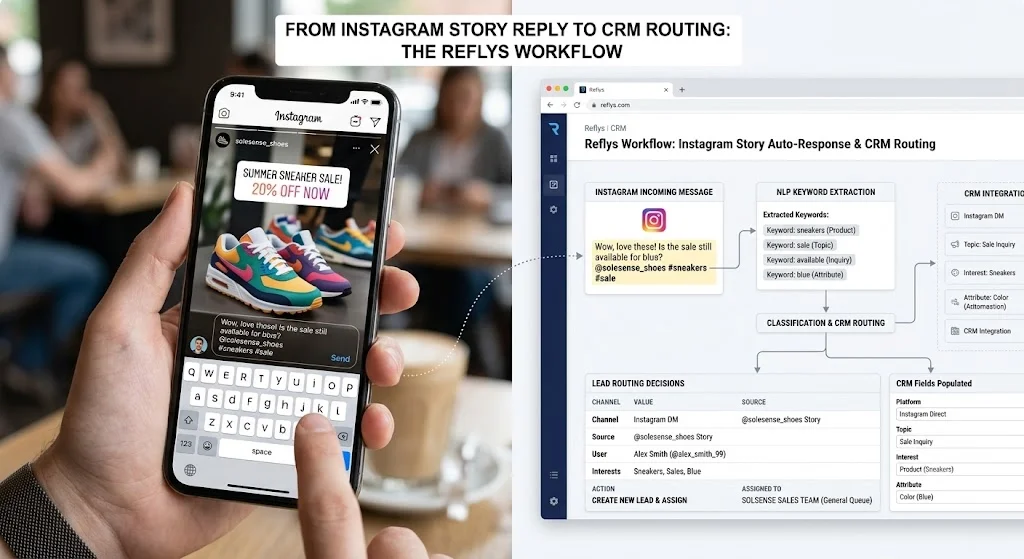
SLA Routing Rules for High-Intent Meta Prospects
| User Input Variable | NLP Extraction Value | SLA Routing Action | Human Handoff Requirement |
|---|---|---|---|
| “What is the cost for 50 seats?” | Keyword: “Cost”, “50 seats” | Route to Enterprise Sales queue | Immediate (Under 2 mins) |
| “Where is my login link?” | Keyword: “login”, Intent: Support | Send automated password reset guide | None (Resolved automatically) |
| “I want to become a partner.” | Keyword: “partner” | Trigger affiliate intake form flow | Scheduled review (24 hours) |
WhatsApp Lead Generation for Bottom-of-Funnel Conversion
WhatsApp is one the best methods of closing deals at the moment, as people do actually check their messages. However, Meta is watching WhatsApp API compliance like a watchful hawk. There’s no way to just send promotions; you need to be sure to follow approved templates when you send a message outside of the typical 24-hour window.
The smartest move here is pushing top-of-funnel web traffic straight into the app. Run a “Click-to-WhatsApp” campaign or use a smart website widget to get them to text you first. Once they do, your automated lead capture sequence takes the wheel, asking for their company size and budget using simple list messages.
Cost-Benefit Analysis: Manual SDRs vs. Automated Lead Capture
| Metric | Manual SDR Team | Reflys Automated Chat Architecture |
|---|---|---|
| Average Response Time | 4.5 minutes | Under 1 second |
| Scalability Limit | Bound by headcount and shift hours | Infinite concurrent sessions |
| Data Entry Accuracy | Prone to human error | 100% exact API syncing |
| Cost per Qualified Lead | High (Salary + Commission) | Fixed (Software subscription base) |
API Rules and Omnichannel Data Hygiene
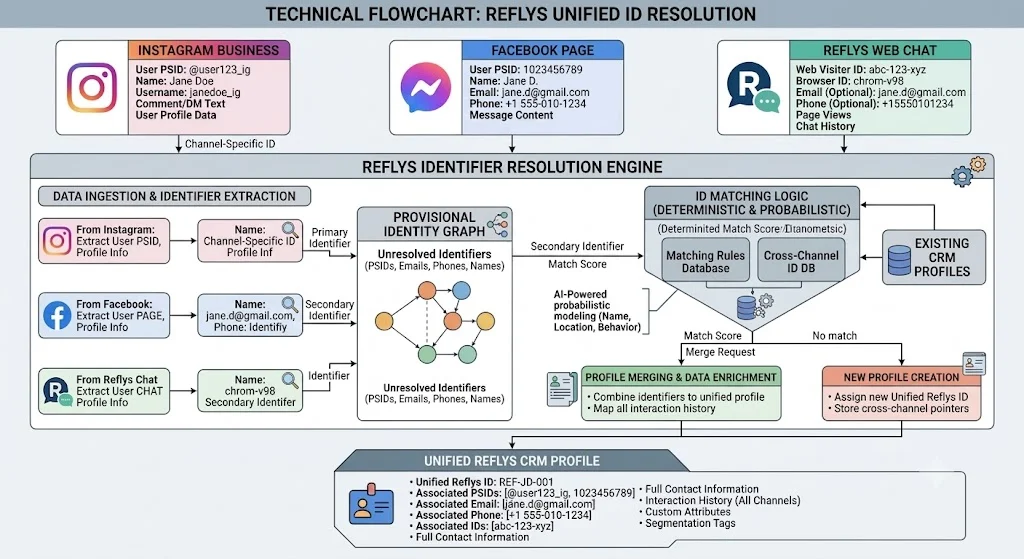
If you operate an omnichannel platform for messaging, maintaining your data in a clean state is a must. If someone is talking to you via Instagram or visits your website, after which they text you via WhatsApp, your system has to be able to recognize it’s the identical person.
This is the process of mapping multiple platforms’ IDs to a single account within your CRM. If you do not follow this procedure, then your bots are likely to be asking the same questions time and time again, making the user feel frustrated and ruining the bargain.
Getting a frictionless sales process off the ground means moving away from passive forms. By putting a smart lead generation live chat system in place, you catch high-intent buyers the exact second they are ready to talk. Stop letting slow manual replies ruin your pipeline. Fix your response times, automate your messaging, and start your Reflys free trial today.